Food
Food 
The neon lights of Tokyo are iconic, but my heart truly belongs to the quiet, earthy hum of the markets in Kyoto. I remember wandering through a narrow alleyway near Nishiki Market, the scent of toasted sesame and damp stone in the air, when I stopped dead in my tracks. There, nestled in a hand-woven basket, was a pile of carrots that looked more like a sunset than a vegetable. Deep purples, vibrant yellows, and a red so intense it matched my favorite lipstick.

In the West, we often relegate the carrot to a side dish or a crunchy filler in a salad, but in that moment, I saw them as cultural heritage. These weren’t just roots; they were a testament to the soil and the hands that tended them. It hit me that the humble carrot is a total icon of resilience. It grows in the dark, pushing through the grit, only to emerge as something sweet and brilliant. That day changed how I view my ingredients—not just as fuel, but as a bridge between the earth and our shared history.
Living in NYC now, my “garden” is a collection of pots on my fire escape, but I still find that same connection every morning. Before I dive into my old-school hip hop playlist and start my yoga flow, I usually grab a couple of those small, snappy heirloom carrots to snack on. There’s something about that natural crunch and the hit of beta-carotene that makes me feel grounded and energized.
Zelda, my Boston Terrier mix, usually tries to “help” with my downward dog by licking my face, but even she knows the ritual. I’ll sit there, feeling the breeze off the East River, and appreciate how this simple root keeps my skin glowing and my eyes sharp for all the recipe testing I do. It’s a moment of intentionality—choosing a whole, vibrant food to start the day. It’s about moving fluently between the fast-paced energy of the city and the enduring, slow-growing wisdom of the earth.
When I want to really let the carrot shine as the protagonist of the meal, I lean into the flavors I gathered during my travels through North Africa and the Mediterranean. Roasting carrots transforms them; the high heat coaxes out their natural sugars, turning them tender and caramelized. I love pairing that sweetness with the smoky, spicy kick of harissa. It’s a dish that feels elevated and modern, yet it’s rooted in ancient spice trades.
ADVERTISEMENT
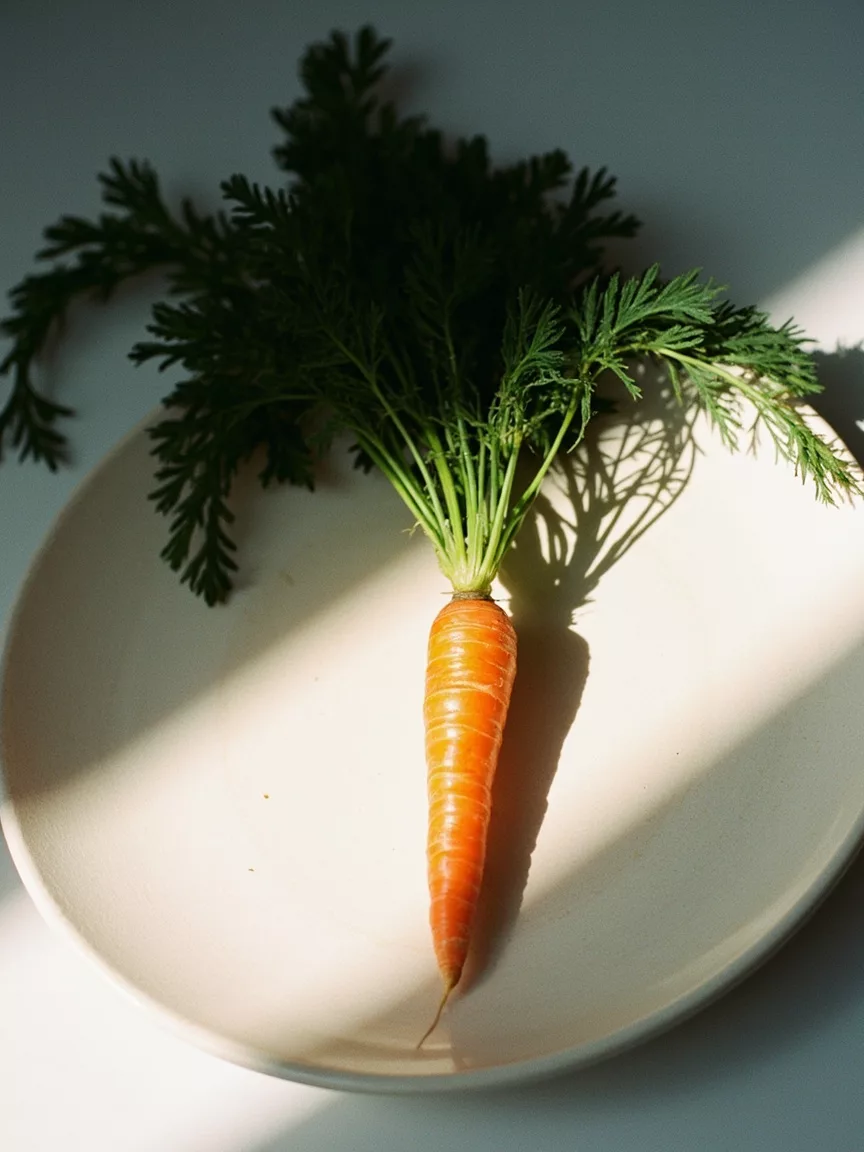
The Hearth’s Golden Glow: Harissa Roasted Carrots
This is my go-to when I want to impress friends at a dinner party without spending hours at the stove. It’s bold, beautiful, and completely vegan.
Ingredients:
- 1 lb (450g) rainbow carrots, scrubbed and halved lengthwise (leave an inch of the green stem for aesthetics!)
- 2 tbsp (30ml) extra virgin olive oil
- 1.5 tbsp (25g) rose harissa paste * 1 tsp (2g) cumin seeds
- 1/2 tsp (3g) sea salt
- 1/4 cup (35g) toasted pistachios, roughly chopped
- A handful of fresh mint leaves, torn
- 1/2 cup (120g) plain vegan yogurt (almond or soy work great)
Instructions:
1. Preheat your oven to 400°F (200°C).
2. In a large bowl, whisk together the olive oil, harissa, cumin seeds, and sea salt. Toss the carrots in the mixture until they are glowing and well-coated.
3. Spread them out on a baking sheet in a single layer. Roast for 25-30 minutes, or until they are tender and have those gorgeous charred edges.
4. While they roast, spread the vegan yogurt on a serving platter.
5. Once the carrots are done, pile them over the yogurt. Top with the chopped pistachios and fresh mint. Serve warm and watch them disappear.
Growing up in Ohio, my mom Sandy always had her hands in the dirt. As a horticulturist, she taught me and my brother Naveen that nothing from the garden should ever be wasted. She’d walk through her greenhouse in her flowy kimonos, pointing out how every part of a plant has a purpose. I’ve carried that “green thumb” philosophy into my NYC kitchen. Whenever I buy carrots with the tops still attached, I hear her voice reminding me that those greens are packed with flavor and nutrients.
Instead of tossing the carrot tops into the compost, I turn them into a zesty, unconventional pesto. It’s a way of honoring the whole ingredient and practicing sustainable, zero-waste cooking. It’s sharp, earthy, and a little bit unexpected—just like the best parts of life. Plus, it’s a great way to stay connected to my roots while I’m building my own path here at cookingwithjade.com.
ADVERTISEMENT

Sandy’s Zero-Waste Emerald Pesto
Don’t let those greens go to waste! This pesto is incredible on pasta, dolloped on top of soup, or even used as a dip for more carrots.
Ingredients:
- 2 cups (60g) firmly packed carrot tops, thoroughly washed and stems removed
- 1/2 cup (15g) fresh basil leaves
- 1/3 cup (50g) toasted pine nuts or walnuts
- 1 large clove of garlic, peeled
- 1/2 cup (120ml) high-quality extra virgin olive oil
- 2 tbsp (10g) nutritional yeast
- 1 tbsp (15ml) fresh lemon juice
- 1/2 tsp (3g) sea salt, plus more to taste
Instructions:
1. Place the carrot tops, basil, nuts, garlic, nutritional yeast, and lemon juice in a food processor.
2. Pulse until the ingredients are finely chopped but not quite a paste.
3. With the motor running on low, slowly drizzle in the olive oil until the pesto reaches your desired consistency.
4. Taste and add a pinch more salt or a squeeze of lemon if it needs a bit more brightness. Store in a glass jar in the fridge for up to a week.
Embracing the carrot isn’t just about nutrition; it’s about seeing the beauty in the everyday. It’s about taking something humble and treating it with the respect it deserves. Whether I’m snacking on them during yoga or roasting them for a feast, I’m always rooting for this vibrant veggie. Stay adventurous in your kitchen, and I’ll see you in the next post!
If you enjoyed this article and recipes or have suggestions on how we can improve it, please leave us a comment below. Also, make sure to check out other dishes I’ve created or stories I’ve written about food culture – here.