Food
Food 

Oh, the holiday season is upon us, and what better way to spread the cheer than with a towering, fluffy panettone? This delightful treat, hailing from Milan, Italy, captures the essence of Christmas in its sweet, fruity loaf, now enjoyed worldwide. Historically a luxurious symbol savored by the affluent for its rich butter and eggs, panettone today transcends social boundaries, uniting everyone with its irresistible aroma and festive flavors.
But why has panettone become such a staple during the holiday season? Beyond its incredible taste, it’s steeped in enchanting tales of love and fortune. Legend has it, a nobleman disguised as a baker crafted the first panettone to win the heart of a local baker’s daughter, while another story suggests that enjoying panettone on Christmas Day brings good luck. Wrapped in romance and mystique, panettone is more than just food—it’s a slice of culture.

Embracing a vegan lifestyle doesn’t mean missing out on traditional holiday delights like panettone. Crafting a vegan version that still boasts the classic airy texture and richness is entirely doable! Here’s what you’ll need for your vegan panettone:
Ingredients:
- 2/3 cup (160ml) lukewarm almond milk
- 1 packet (about 2 1/4 teaspoons) active dry yeast
- 3 cups (390g) all-purpose flour
- 1/2 cup (100g) granulated sugar
- 1/3 cup (75g) melted vegan butter
- Zest of 1 lemon
- Zest of 1 orange
- 1/2 teaspoon salt
- 1 teaspoon vanilla extract
- 1/2 cup (75g) dried cranberries, pre-soaked in orange juice
- 1/2 cup (75g) sultanas, pre-soaked in orange juice
- 1/4 cup (50g) candied citrus peel
Directions:
- Start by adding the yeast to the lukewarm almond milk. Let it sit until it becomes frothy—this takes about 10 minutes. This proofing step is vital, as it starts the fermentation process that gives panettone its signature fluffiness.
- In a large mixing bowl, sift the flour and sugar.
- Add in the lemon zest, orange zest, salt, and then stir in the vanilla extract along with the yeast mixture.
- Gradually mix in the melted vegan butter, combining everything into a sticky, soft dough.
- Transfer the dough onto a lightly floured surface and knead gently for around 10 minutes.
- Return it to the bowl, cover with a cloth, and let it rise in a warm spot until it doubles in size—about 1.5 to 2 hours. Yes, making panettone is a labor of love and patience, but the results are well worth the wait!
- Once risen, mix in the cranberries, sultanas, and candied peel. Transfer your dough into a panettone mold or a large coffee can lined with parchment paper. This helps the dough maintain its iconic shape as it bakes to lofty heights.
- Allow the dough to proof once more until it reaches the top of the mold, roughly another hour. Meanwhile, preheat your oven to 350°F (175°C). Brush the top of the dough with a bit of almond milk for a golden crust and bake it for about 40 to 50 minutes. It’s perfectly baked when it turns a lovely golden brown, and a skewer inserted in the center comes out clean.
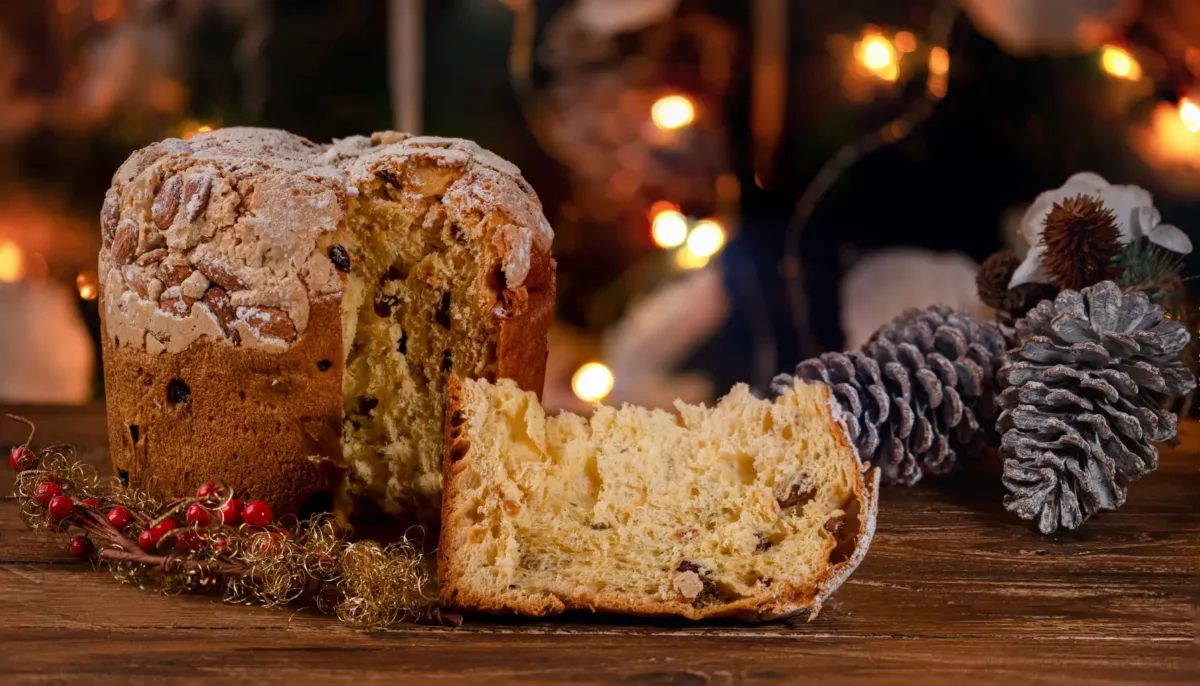
For serving, let your panettone cool completely before slicing. Enjoy this festive treat with a warm cup of your favorite beverage. The blend of citrus and dried fruits makes it irresistibly aromatic!
To store, wrap the panettone in plastic or keep it in an airtight container. It stays fresh for up to a week at room temperature. If you don’t plan to finish it within a week, slice and freeze individual pieces. Then, whenever you crave a slice, simply toast one directly from the freezer for a quick, scrumptious snack.
Incorporating this vegan Italian masterpiece into your holiday traditions will surely infuse your festive gatherings with warmth, tradition, and a dash of old-world charm. Happy baking, everyone!
If you enjoyed this recipe or have suggestions on how we can improve it, please leave us a comment below. Also, make sure to check out other dishes I’ve created or stories I’ve written about food culture – here.