Countries
Exploring the Roots: The Historical Origin of Tanabata
There’s something incredibly touching about delving into the traditions of my birthplace, Japan. Each story feels like a vividly colored page out of a well-thumbed family scrapbook. Today, I’m diving into Tanabata, a gem among Japanese festivals with roots stretching back over a thousand years. This enchanting celebration melds Chinese folklore with quintessential Japanese customs, evolving through centuries into a spectacle as vibrant as Tokyo’s neon-lit streets during the festivities.
Originally inspired by the Chinese Qixi Festival, Tanabata was introduced to Japan in the Heian period by Empress Koken around the 8th century. Initially a courtly event, it showcased weaving—a skill then considered essential for a virtuous wife and wise mother. Infused with romance and celestial enchantment over the centuries, this festival woven with local traditions spread its magic across the entire country, becoming an eagerly awaited annual affair.
Delving into the Star-Crossed Tale: The Legend of Orihime and Hikoboshi

At the heart of Tanabata lies the poignant love story of Orihime and Hikoboshi. Orihime, the weaver star (Vega), and Hikoboshi, the cowherd star (Altair), dwelled apart on either side of the Milky Way, a celestial river of stars. Their love was deep, but it led them to neglect their divine duties. In response, Orihime’s father, the sky king, allowed the star-crossed lovers to meet just once a year on the seventh day of the seventh lunar month.
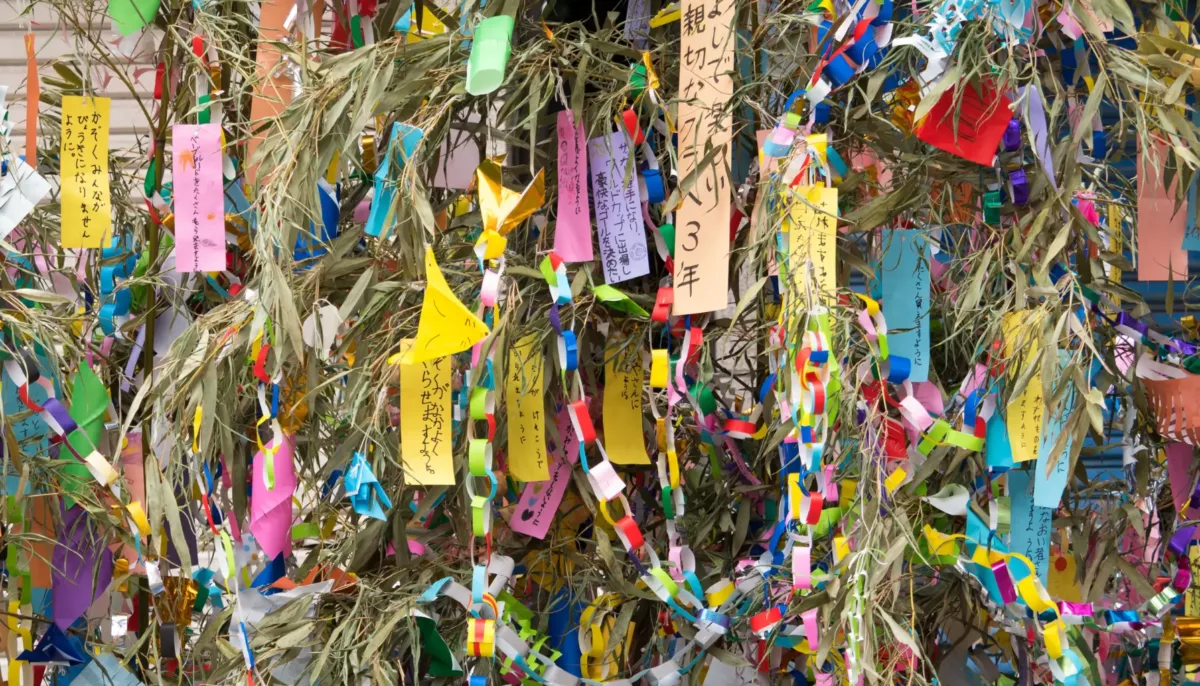
This tale captures themes of love, separation, and joyful reunion, resonating universally. Across Japan, towns and villages celebrate by decorating with vibrant streamers and tanzaku, colorful paper strips where people write their prayers and wishes, hanging them on bamboo branches in hopes they come true.
Modern Manifestations: How Tanabata is Celebrated Today Across Japan
Today, the timeless appeal of Tanabata is evident in the parades, music, dances, and firework displays that span cities and towns. Each locale infuses its unique flavor into the celebrations. For instance, Sendai hosts their festival in August, renowned for its stunning decorations. Closer to Tokyo, Hiratsuka’s July festival dazzles with a lively parade and bustling markets.
These festivities are not just visual and cultural feasts; they also significantly boost local economies. Stalls brim with everything from traditional foods to unique crafts, embodying community spirit and showcasing Japan’s rich heritage seamlessly woven with contemporary threads.

Cultural Impact and Personal Reflections: Why Tanabata Holds a Special Place in My Heart
Tanabata transcends being merely a festival for me; it symbolizes the profound impact of stories in our lives. Growing up in Columbus, Ohio with culturally diverse roots, I found the legend of Orihime and Hikoboshi both mystical and relatable—a narrative of love overcoming immense barriers, much like overcoming my own cultural and geographic boundaries.
Each year, I celebrate Tanabata in my own special way—preparing vegan sushi and brewing matcha tea on my NYC fire escape, writing wishes on tanzaku under a blanket of urban stars. These moments are not only a nod to my Japanese heritage but a bridge to a rich cultural past coursing through my veins. As each wish intertwines with the next, I’m reminded of our shared human story—each of us a star in the sprawling cosmos of collective dreams and aspirations.
If you enjoyed this article or have suggestions on how we can improve it, please leave us a comment below. Also, make sure to check out other articles I’ve created or stories I’ve written about food culture – here.