Desserts

Exploring My Love for Mochi: A Journey from Japan to My Kitchen
Growing up in Columbus, but born in Hatsukaichi, Japan, mochi wasn’t just a treat—it was a slice of my heritage that I carried with me like the curls in my hair and the ink on my skin. My fondness for this delightful, chewy,sweet grew deeper during my travels back to Japan. The texture, the simplicity, and the endless variety charmed me as much as the cherry blossoms. Once I decided to venture into vegan cooking, integrating mochi into my repertoire felt like Destiny had handed me a sticky, sweet invitation.
Traditionally made from glutinous rice pounded into a paste and molded into shape, mochi has always fascinated me. Not only because it’s scrumptiously delightful but because it connects me to a part of my biological roots. Recreating mochi in my tiny NYC kitchen, vegan style, makes my culinary experiments feel like a bridge linking past traditions with modern, compassionate cooking practices.
Easy Mochi Making: Starting with the Basics
Haven’t tried making mochi at home yet? Fear not. The process is surprisingly simple, and the results are blissfully satisfying. You’ll kick things off with glutinous rice flour, the star of the show. This isn’t your average flour; it gets gloriously sticky once heated, perfect for mochi magic. Mix about 1 cup (120g) of glutinous rice flour with 1/4 cup (50g) of sugar and a pinch of salt in a bowl. To this, add 3/4 cup (180ml) of water and whisk until smooth.
Now, let’s cook! Cover your bowl with plastic wrap (make sure to leave a small vent), and microwave for about a minute, give it a stir, and then zap it for another minute. The dough will puff up and turn pale. Once it’s steamed and sticky, let it cool just enough so you can handle it. Dust your hands and workspace well with cornstarch to prevent sticking, and start shaping the mochi into your desired size and thickness.
Spicing Up Traditional Mochi: Vegan-Friendly Flavors and Fillings
The real magic of mochi is its versatility. Sure, traditional fillings like sweet red bean paste are divine, but experimenting with different vegan-friendly fillings can turn your mochi into a box of delightful surprises. I love mashing sweetened adzuki beans with a bit of maple syrup for a classic twist, but don’t be shy—get inventive! How about injecting a dollop of coconut cream mixed with mango pulp for a tropical vibe? Or maybe a spoonful of dark chocolate ganache for those more indulgent moments?
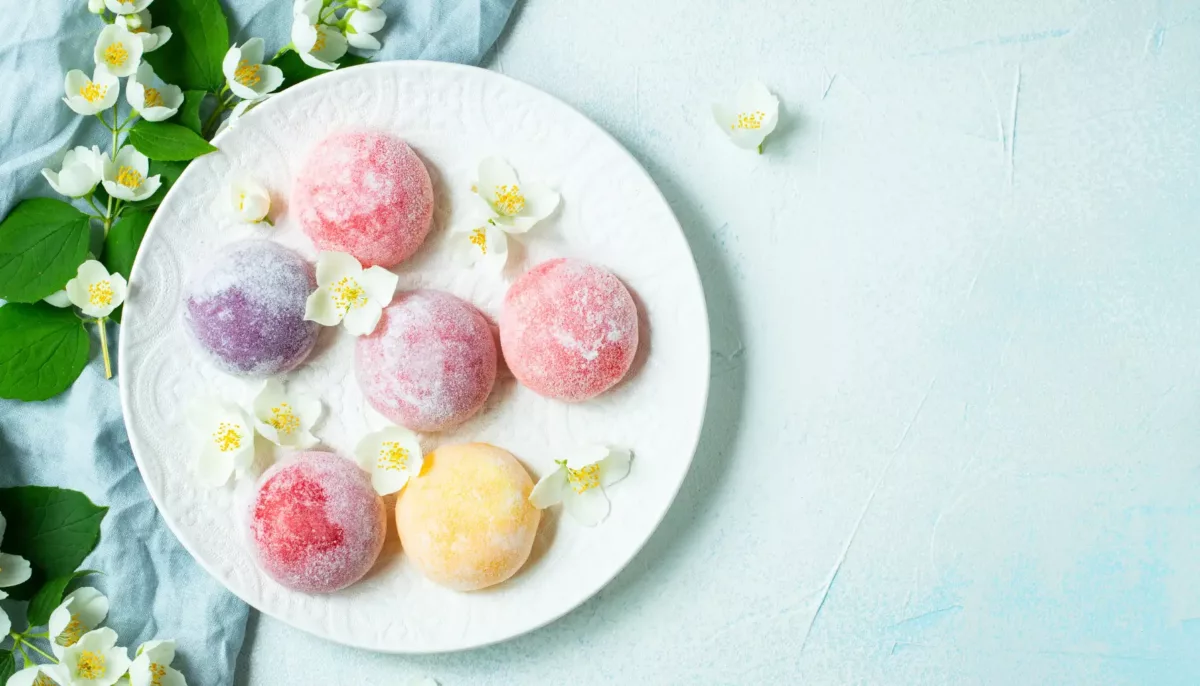
You can also flavor the dough itself to add an extra layer of yum. A couple of drops of natural food coloring can make your mochi pop, or add a pinch of matcha powder for a subtle green tea flavor that’s as healthy as it is delicious. Here’s the chance to let your creativity shine through. Each piece of mochi is a blank canvas waiting for your culinary brushstrokes!
ADVERTISEMENT
From Kitchen to Table: Tips for Perfect Mochi Every Time
A bit of kitchen wisdom never hurts, and with mochi, the little tricks can be game changers. Keep your workspace well-dusted with cornstarch to manage the sticky dough. When molding the mochi, apply even pressure to seal your fillings inside snugly—uneven mochi might end up leaking those delicious fillings, and we definitely don’t want that!
For that final touch, presenting your mochi can be as simple as a sprinkle of coconut flakes or as decadent as a brushstroke of edible gold leaf. Just remember, mochi is best enjoyed the day it’s made as it tends to harden over time. Imagine the joy of serving these chewy treats at your next gathering, watching your friends’ faces light up with surprise at your culinary skills!
From the traditional tea rooms of Japan to the lively streets of NYC, mochi has traveled through time and space to grace our tables. Whether you keep it vegan, sprinkle creativity with the fillings, or stick to the time-honored methods, every bite of mochi tells a story—a delicious, squishy, delightful story. Dive into the simplicity of mochi making and enjoy connecting with a piece of culinary history, one tasty bite at a time!
If you enjoyed this recipe or have suggestions on how we can improve it, please leave us a comment below. Also, make sure to check out other dishes I’ve created or stories I’ve written about food culture – here.