Cooking Lessons

Discovering Passatelli: A Dive into its Rustic Roots in Emilia-Romagna
Nestled in the lush landscapes of Emilia-Romagna, Italy, you’ll find a hidden culinary gem—Passatelli. This pasta might not headline most Italian menus outside its native region, but its simple charm and rich flavors embody the quintessence of Italian comfort food. Traditionally whipped up during the chillier months, Passatelli offers a warm, welcoming embrace, perfect for family gatherings. Made with breadcrumbs, eggs, a grated hard cheese like Parmigiano-Reggiano, and often a whiff of lemon zest and nutmeg, it’s rustic Italian cooking at its absolute best.
My love for Passatelli blossomed on a serene winter day in Bologna. Witnessing how these humble ingredients were magically transformed into a heartwarming meal solidified my fondness for this dish. The beauty of Passatelli lies not just in its flavor but in its history and method of preparation, deeply rooted in the agrarian culture of Emilia-Romagna—a true lesson in resourceful cooking.
The Key Ingredients for Authentic Passatelli
Crafting authentic Passatelli depends on a few pivotal ingredients that uphold its traditional flavor profile. Crucial among them are the breadcrumbs—not just any breadcrumbs, but fine crumbs from stale, day-old bread to ensure the Passatelli has its signature texture. Parmigiano-Reggiano or Grana Padano are the cheeses of choice, lending a rich depth of flavor and a delicate salty bite.
Bind these with fresh, organic eggs to create cohesion while nutmeg and lemon zest lift the otherwise straightforward dough into a fragrant, tantalizing mixture. Occasionally, some might add a splash of broth or a dollop of butter to boost the richness. Simplicity is the charm of Passatelli, allowing every ingredient to distinctly shine through.
ADVERTISEMENT

A Step-by-Step Guide to Making Passatelli at Home
Passatelli is less about complexity and more about technique. Here’s how you can bring this delightful pasta to your table:
- Begin by mixing 2 cups (200g) of finely ground breadcrumbs with 1 cup (100g) of grated Parmigiano-Reggiano, the zest of one lemon, and a pinch of freshly grated nutmeg.
- Beat 3 large eggs and blend them thoroughly into the breadcrumb cheese mixture until a pliable dough forms; it should be firm yet moldable.
- Employ a Passatelli press or a potato ricer with large holes to extrude the dough into noodle-like shapes, straight into simmering salted water or broth.
- Cook just until they bob to the surface and puff slightly, which should take about 1-2 minutes. Then, gently lift them out with a slotted spoon.
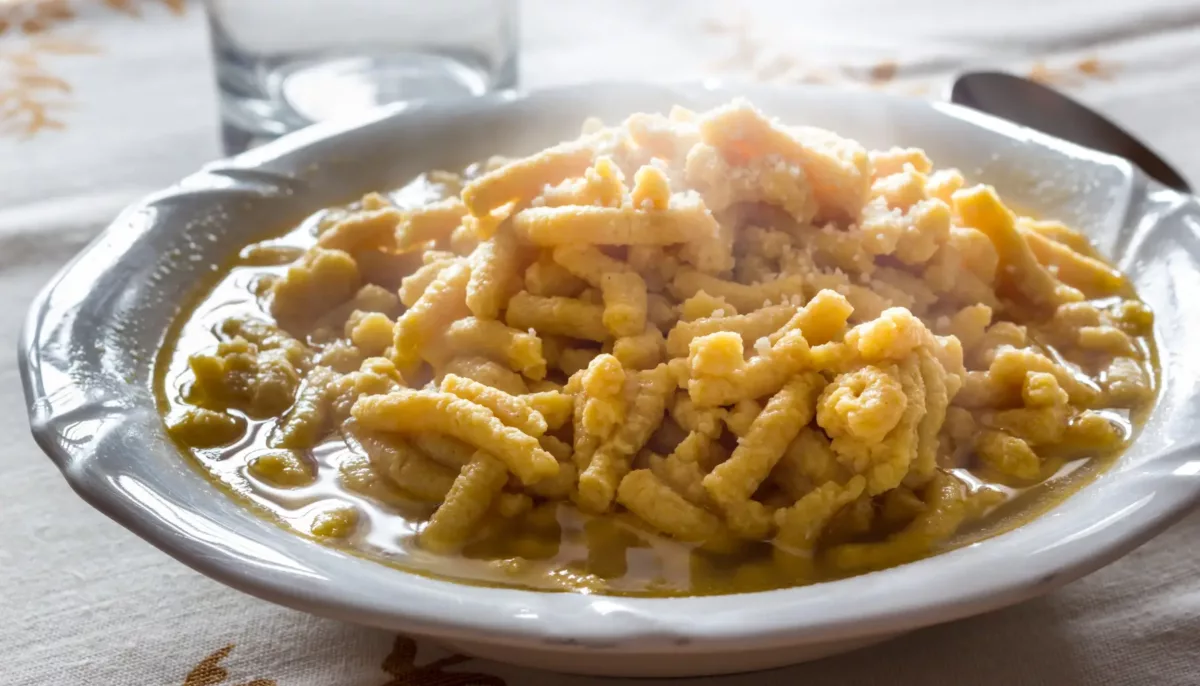
Witnessing the dough morph into warm, comforting noodles as it simmers is nothing short of culinary magic.
Serving Suggestion: Pairing Passatelli with Regional Accompaniments
To fully savor Passatelli, embrace the traditional serving methods. In its hometown of Emilia-Romagna, Passatelli is often ladled into a sumptuous, homemade chicken or beef broth, creating a nutrient-rich, soul-soothing soup. Alternatively, for a drier option, toss them lightly with some melted butter, sage, and an extra sprinkle of grated cheese.
Pair these delightful noodles with a glass of regional Italian white wine like Trebbiano, or choose a Sangiovese if you prefer red. Both selections beautifully slice through the richness of the cheese while elevating the meal’s flavors. Round out your dining experience with a simple arugula and cherry tomato salad dressed in balsamic vinegar and extra virgin olive oil, creating a perfect meal that transports you right to the heart of Italy.
Through Passatelli, we not only delve into a dish with humble origins but also celebrate the inventive spirit of Italian cuisine, where the simplest ingredients are elevated into culinary masterpieces. It’s more than just food—it’s a rich tapestry of tradition, camaraderie, and the cozy warmth of the Italian kitchen.
If you enjoyed this article or have suggestions on how we can improve it, please leave us a comment below. Also, make sure to check out other dishes I’ve created or stories I’ve written about food culture – here.