Appetizers

Discovering the Delights of Hawaiian Mangoes
Ever tried a mango that just bursts with flavor in your mouth? Hawaiian mangoes do just that with their incredible juiciness and sweet, tangy zest. Thanks to their lush, creamy texture and balance of sweetness and tartness, these mangoes are prime candidates for a delicious pickling adventure. You’ll often find varieties like Haden, Keitt, and Kent in Hawaii, boasting vibrant, deep orange flesh that’s not only a treat to the eyes but also rich in nutrients.
My first encounter with a Hawaiian mango was pure magic. Picture this: a family road trip along Maui’s coast, the sun setting, painting everything gold, stopping by a roadside stand, and there it was—the mango that changed my life. The unique taste is credited to the rich volcanic soil and distinctive microclimates of Hawaii, enhancing the fruit’s complex flavors, ideal for standing up to the bold tang and spice of pickling.
Essential Ingredients and Tools
Ready to transform your kitchen into a tropical paradise? Here’s what you’ll need for your mango pickling journey:
- Mangoes: Grab 4 medium Hawaiian mangoes, ripe yet firm.
- Vinegar: 1 cup (240ml) of apple cider vinegar adds a sweet, fruity twist.
- Sweetener: ¾ cup (150g) of coconut sugar to honor the mangoes’ tropical essence.
- Spices: 1 teaspoon (2g) of turmeric for a warm glow, 1 teaspoon (2g) of black mustard seeds, and a pinch of red chili flakes for that extra kick.
- Salt: 1 tablespoon (15g) of Himalayan pink salt to enhance the sweetness.
- Water: 1 cup (240ml) to perfect the pickling concoction.
And for the tools:
- Glass jars: 2 large sterilized jars for storing your pickled mangoes.
- Sharp knife and cutting board: Essential for those perfect mango slices.
- Saucepan: To heat your pickling brew.
- Funnel: Makes pouring the brine a breeze.
- Ladle: Scoop and pour—don’t miss any of that flavorful brine.
ADVERTISEMENT

The Pickling Process
Transforming Hawaiian mangoes into a pickled masterpiece is simple yet rewarding. Here’s how:
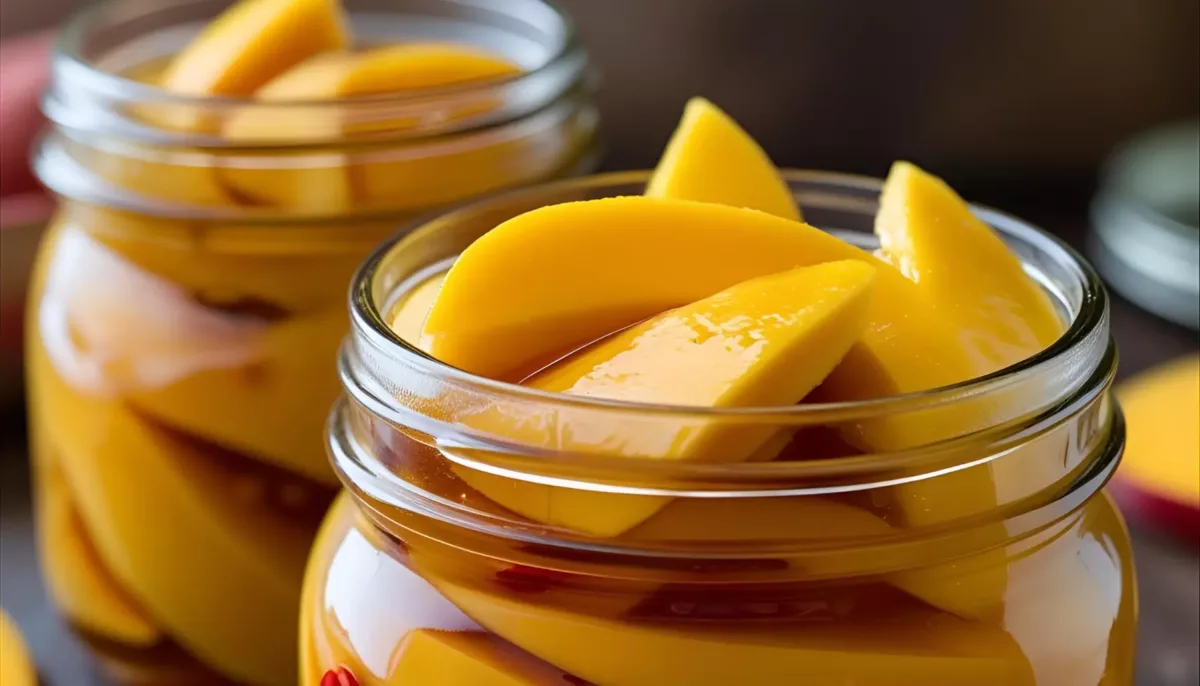
- Prepare the Mangoes: Peel and slice the mangoes into long, thin strips. This shape is not only aesthetically pleasing but also great for soaking up the pickling flavors.
- Make the Brine: In your saucepan, whisk together the apple cider vinegar, water, coconut sugar, turmeric, black mustard seeds, red chili flakes, and salt. Bring the mix to a boil, then simmer for 5 minutes to let the flavors meld.
- Jar Assembly: Organize the mango strips vertically in your sterilized jars. Using a funnel, carefully pour the hot brine over the mangoes, ensuring the spices are evenly spread. Aim to leave about half an inch (1.27 cm) of headspace at the top.
- Sealing the Deal: Secure the jar lids and let them cool at room temperature. Once cool, give the jars a gentle shake to redistribute the spices before refrigerating.
ADVERTISEMENT
Serving and Storage Tips
Pickled mangoes are a versatile tropical addition to various dishes. Here are some creative, vegan-friendly ways to enjoy them:
- Salad Topping: Dice the pickled mangoes and add them to your salads for a zesty flare.
- Avocado Toast: Elevate your avocado toast by topping it with slices of pickled mango for a sweet, tangy twist.
- Rice Dishes: Stir them into coconut rice to introduce an exciting flavor burst.
Store your pickled mangoes in the fridge and enjoy them within a month for the best taste. Always use clean utensils to maintain freshness and extend their shelf life.
By following these straightforward steps, you can infuse your kitchen with the essence of Hawaii and enjoy a tropical taste adventure right at home. Don’t hesitate to share this tangy treasure with friends or save a jar just for yourself!
If you enjoyed this recipe or have suggestions on how we can improve it, please leave us a comment below. Also, make sure to check out other dishes I’ve created or stories I’ve written about food culture – here.