Food
Food 
Listen, I love a good rain shower as much as the next girl—especially when I’m doing fire escape yoga and the NYC heat is just too much—but your mushrooms? They absolutely hate it. There’s this age-old debate in the culinary world about whether you should drench your fungi or keep them bone-dry, and honestly, if you’re looking to level up your plant-based game, the answer matters more than you think. When I first moved to the city and started experimenting in my tiny kitchen with some old-school hip hop blasting in the background, I realized that my mushrooms were coming out slimy instead of savory.
The truth is, mushrooms are basically little sponges. Their cellular structure is porous, meaning if you run them under a heavy stream of water, they’re going to soak it all up. When you toss those water-logged bits into a hot pan, all that moisture has to go somewhere. Instead of getting that gorgeous, golden-brown sear we all crave, they end up steaming in their own juices. You lose that meaty texture that makes vegan cooking so satisfying, and you’re left with something that feels a bit… well, sad. My brother Naveen, who’s a total skincare guru out in LA, always tells me that hydration is key for the skin, but in the kitchen, sometimes less is definitely more.
The Art of the Gentle Buff
Whenever I’m prepping a big batch of Creminis or Portobellos, I think about the tattoo on my left arm—the one of my Thai grandma’s tea set. It reminds me that some things require a delicate touch and a bit of patience. To get that grit off without ruining the integrity of the mushroom, I’ve moved away from the faucet entirely. My foolproof method involves a slightly damp paper towel or a dedicated soft-bristled pastry brush. You want to gently wipe away any visible dirt or “peat moss” from the cap and the stem. It’s a bit more meditative than just rinsing them in a colander, and it gives you a chance to really inspect your produce.

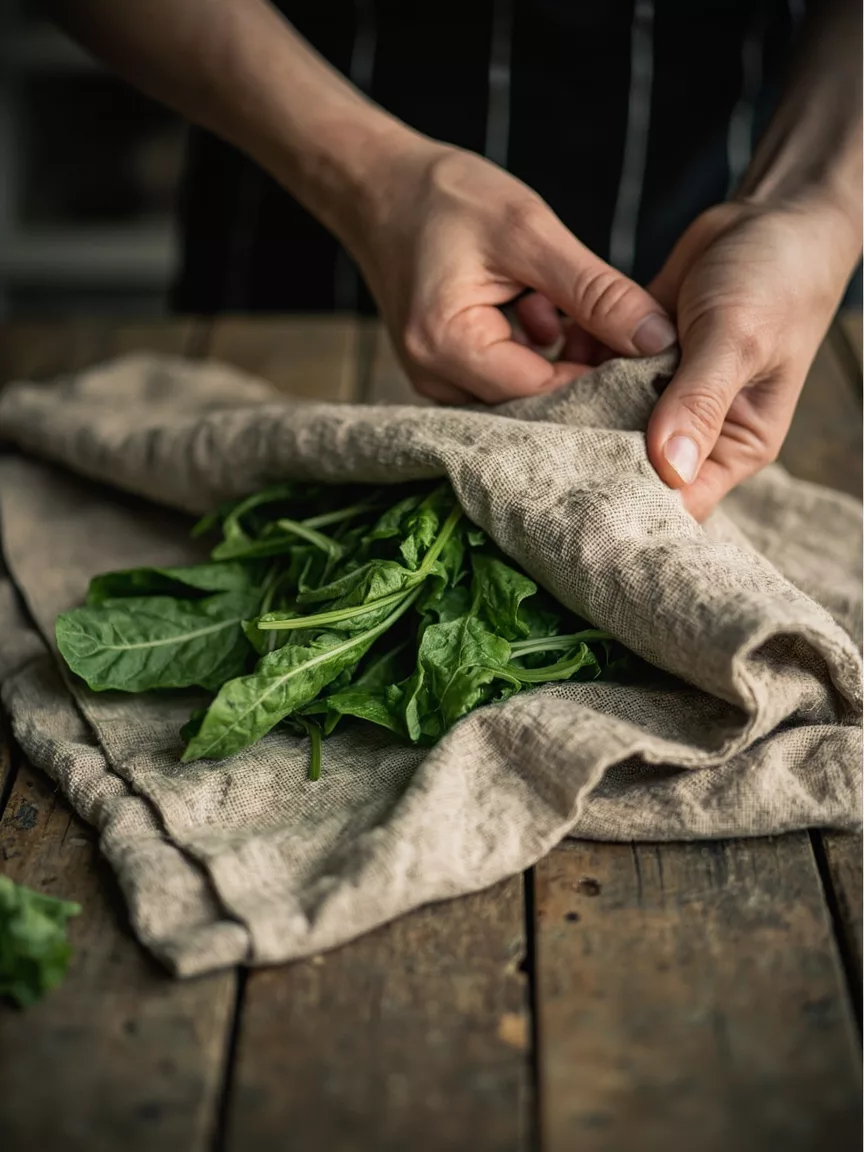
If you happen to find yourself with some particularly stubborn, muddy wild mushrooms (the kind my dad, Edward, loves to find at the farmers market back in Ohio), you can do a very quick “dunk and spin.” Plunge them into a bowl of cool water, swish them for five seconds, and get them out immediately onto a clean kitchen towel. The key is to never let them sit. Treat them like a luxury fabric—hand wash only, and dry immediately. Zelda, my Boston Terrier mix, usually sits right by my feet while I do this, hoping a stray bit might fall, though she’s much more interested in the vegan cheese I usually have on the counter.
Wisdom from the Japanese Forest
My journey back to my birthplace in Hatsukaichi, Japan, really shifted how I view ingredients like Shiitake and Maitake. In Japanese culture, there’s a profound respect for the “soul” of the ingredient. When I was visiting family near the forests there, I learned that wild mushrooms are often handled with an almost sacred level of care. They aren’t just “vegetables” to be processed; they are gifts from the earth that carry the scent of the woods. Washing them too aggressively is seen as washing away the “umami”—that deep, savory fifth taste that is the backbone of so many incredible dishes.

Traditional Japanese chefs often use a small, dry cloth to flick away forest debris. They understand that the skin of the mushroom is where a lot of the flavor and aroma live. By keeping them dry, you allow the natural sugars to caramelize properly when they hit the heat. This respect for the ingredient’s natural state is something I try to bring into every recipe at cookingwithjade.com. It’s about being a cultural translator—taking those ancient techniques and making them work for a busy Tuesday night in a modern apartment.
Chasing the Golden Sear
Mastering the “dry clean” is the secret to unlocking the ultimate vegan umami experience. When a dry mushroom hits hot oil, the Maillard reaction happens almost instantly. This is the chemical reaction between amino acids and reducing sugars that gives browned food its distinctive flavor. If the mushroom is wet, the temperature of the pan drops, and you miss out on that complex, smoky, “meaty” profile that makes plants taste so incredible. It’s the difference between a side dish and the star of the show.

To celebrate the beauty of a perfectly cleaned mushroom, I want to share one of my absolute favorite ways to prep them. This dish is all about the texture—crispy edges, tender centers, and a punch of garlic that would make my mom, Sandy, proud (she’s a horticulturist, so she appreciates anything that highlights the earth’s bounty).
Jade’s Crispy Garlic & Thyme Sauté
Ingredients:
- 1 lb (454g) Cremini or Shiitake mushrooms, dry-cleaned and sliced
- 2 tbsp (30ml) Better Body Foods Extra virgin olive oil
- 1 tbsp (14g) Vegan butter
- 3 cloves Garlic, minced
- 1 tsp (1g) Fresh thyme leaves
- 1/2 tsp (3g) Sea salt
- 1/4 tsp (1g) Black pepper
- 1 tsp (5ml) Fresh lemon juice
Instructions:
- Heat a large skillet over medium-high heat. Add the olive oil and let it get shimmering hot.
- Add the mushrooms in a single layer. Resist the urge to stir! Let them sit for 3-4 minutes until the bottoms are deep golden brown.
- Flip the mushrooms and add the vegan butter, minced garlic, and fresh thyme.
- Sauté for another 2-3 minutes, tossing occasionally, until the garlic is fragrant but not burnt.
- Remove from heat, sprinkle with sea salt, black pepper, and a squeeze of fresh lemon juice to brighten the flavors.
- Serve immediately as a topper for Hero toast or alongside some creamy polenta.
Cleaning your mushrooms like a pro isn’t just a kitchen chore; it’s an act of mindfulness. It’s about slowing down, honoring where your food comes from, and making sure every bite counts. Give the dry-clean method a try next time you’re in the kitchen—your taste buds (and the mushrooms) will thank you!
If you enjoyed this article or have suggestions on how we can improve it, please leave us a comment below. Also, make sure to check out other dishes I’ve created or stories I’ve written about food culture – here.